
WELCOME BONUS 300%
UP TO €2000 + 100
FREE SPINS
UP TO €2000 + 100
FREE SPINS
Home → Blackjack
Blackjack at Happyslots: Variants, Rules and Payouts
Surrender vs Playing Out on 16 vs 10
Late Surrender is a rule modifier that improves the RTP by approximately 0.08 percentage points in standard multi-deck games. This option allows players to forfeit half their stake after the dealer checks for blackjack, reducing long-term losses compared to playing out weak hands. The financial consequence is immediate, as the player retains fifty percent of the original wager instead of risking total loss.
Early Surrender offers a significantly stronger advantage of up to -0.6 percentage points but remains extremely rare in modern online casino environments. While Late Surrender provides a modest 0.08 point boost, Early Surrender would theoretically reduce the house edge much further if available. High rollers should verify specific table rules before committing significant capital to variants lacking this protective mechanism.
The decision matrix shifts when comparing surrender value against basic strategy outcomes on hard sixteen against a dealer ten. Forcing play on such a hand typically results in a higher expected loss than the fixed penalty of surrendering. This mathematical reality makes the surrender option a critical tool for bankroll preservation during high-stakes sessions.
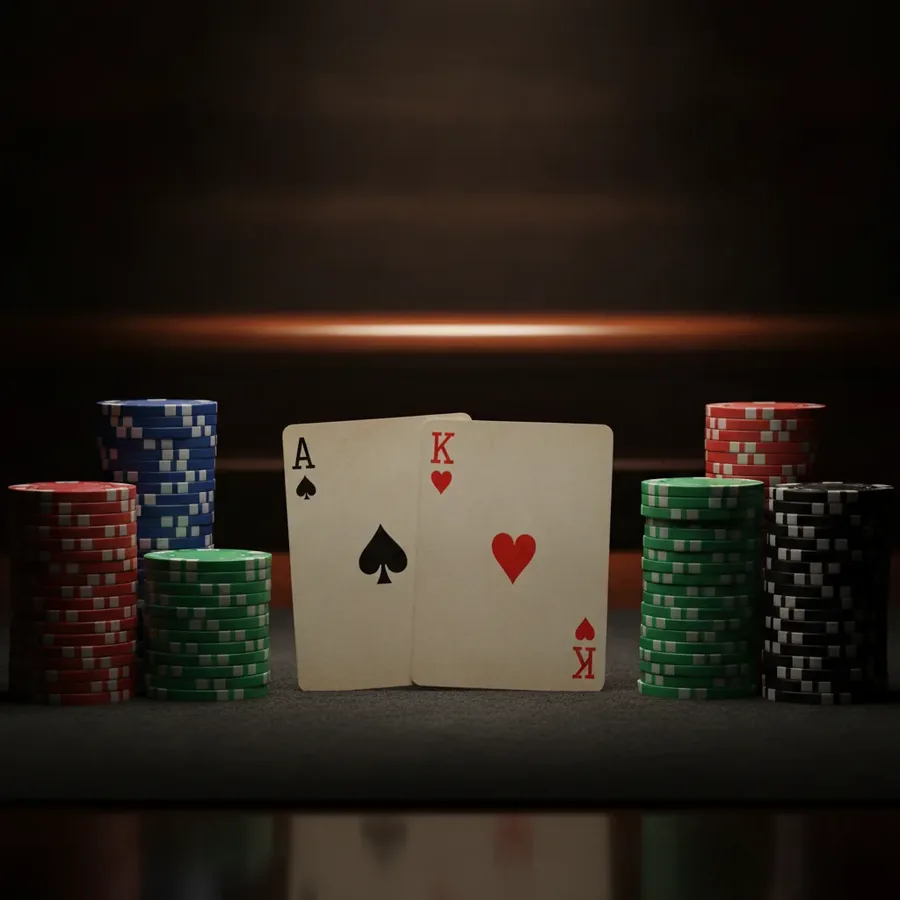
How many decks are in the shoe?
Blackjack Ein Deck operates with classical rules and an exceptionally low house edge of 0.15 percent due to the single-deck composition. Using fewer decks directly lowers the casino's mathematical advantage, providing approximately minus 0.48 percentage points compared to eight-deck shoes. This configuration demands precise card counting skills to maintain the theoretical edge over the house.
Liberal Vegas Strip utilizes multiple decks but compensates with favorable rules like S17, DAS, and resplitting, achieving a 99.72 percent RTP. The standard deviation for this variant stands at 1.15, indicating moderate volatility for high stakes betting strategies. Players benefit from the liberal rule set even though the deck count increases the inherent house hold.
Six-deck games often pair reduced deck counts with inferior payout structures, specifically the prevalent six-to-five blackjack payout. This structural change adds exactly 1.39 percentage points to the house edge, negating any benefit gained from using fewer cards. The resulting 98.15 percent RTP makes these tables mathematically inferior to traditional three-to-two variants.
Splitting costs double bet: plan budget
Splitting pairs allows players to create two separate hands, effectively doubling the initial wager to capitalize on favorable starting cards. This mechanic permits up to four distinct hands, increasing exposure and potential variance during intense high roller sessions. Budget planning must account for the immediate requirement of matching the original stake for each new split hand.
Resplitting Aces improves the overall RTP by 0.08 percentage points, offering a slight mathematical advantage for patient players. However, most casinos restrict aces to receiving only one additional card, limiting the strategic depth of this specific split. High stakes players must weigh this limitation against the increased capital commitment required for multiple active hands.
Doubling After Split (DAS) enhances the game's RTP by approximately 0.14 percentage points, rewarding aggressive play after initial splits. This rule permits players to double their bet on any two-card hand following a split, maximizing profit opportunities on strong positions. Integrating DAS availability into bankroll models ensures sufficient funds cover potential doubled wagers across all active hands.
One Deck vs Eight Decks in House Edge
Single-deck blackjack delivers a 99.85 percent RTP with a mere 0.15 percent house edge under classical rules. Reducing the deck count from eight to one removes approximately 0.48 percentage points of advantage from the casino. This mathematical efficiency makes single-deck tables highly attractive for skilled high rollers who employ optimal strategy consistently.
Eight-deck variations typically suffer from higher house edges unless compensated by specific rule adjustments like late surrender or DAS. The increased number of cards dilutes the impact of card removal effects, making perfect strategy slightly less potent over short sessions. Players must compare the base edge against rule modifiers to determine the true cost of playing multi-deck shoes.
Insurance bets in six to eight deck games carry a steep 7.47 percent house edge, drastically reducing overall returns. This side bet pays 2:1 but requires a true count of plus three or higher to become mathematically profitable for counters. Basic strategy universally mandates rejecting insurance, preserving the primary game's RTP from catastrophic erosion.
Clicked Too Late: Hand Is Automatically Held
Infinite Blackjack by Evolution accepts unlimited seats with betting limits ranging from one to five thousand euros per hand. The software automatically holds hands when players fail to act within the designated time window, preventing game delays. High rollers must maintain constant attention to avoid losing strategic opportunities due to interface latency or distraction.
Lightning Blackjack features multipliers up to twenty-five times on winning hands, with stakes capped at two thousand five hundred euros. These random boosts can dramatically alter session volatility, requiring adjusted bankroll management for substantial wagers. The automatic hold function ensures continuous flow despite the complex multiplier calculations occurring behind the scenes.
Blackjack Party offers a moderated environment with stakes between one and one thousand euros, focusing on social interaction rather than pure speed. Two hosts guide the action, but the underlying mechanics still enforce strict time limits for player decisions. Missing a click results in a forced hold, potentially locking in suboptimal plays against strong dealer upcards.
Blackjack variants at a glance
| Variant | Payout | House edge | Rule | Bet range |
|---|---|---|---|---|
| Blackjack Ein Deck, klassische Regeln, 3:2 | 99.85% | 0.15% | Weniger Decks = niedrigerer Vorteil; ein Deck gibt ca. −0.48 Prozentpunkte gegenüber 8 Decks. Oft durch 6:5 Auszahlung kompensiert. | Blackjack 3:2, Gewinn 1:1 |
| Blackjack Surrender (Late Surrender) – Regel-Effekt | n.a. (Regel-Modifikator) | −0.08 Prozentpunkte | Spieler gibt Hand nach Dealer-Blackjack-Prüfung auf, verliert die Hälfte des Einsatzes. Verbessert RTP um ca. 0.08 Prozentpunkte. Early Surrender ist wesentlich wertvoller (bis −0.6 Prozentpunkte), aber extrem selten. | Rückzahlung 50% des Einsatzes |
| Blackjack Insurance / Versicherung (6–8 Decks) | 92.53% | 7.47% | Separate Nebenwette bis 50% der Hauptwette, wenn der Dealer ein Ass hat. Basisstrategie schreibt IMMER Ablehnung vor (außer Karten zählen bei True Count ≥ +3). Bei einem Deck Vorteil ≈ 5.88% | Insurance 2:1 |
| Blackjack Auszahlung 6:5 statt 3:2 (6 Decks) | 98.15% | 1.85% | Ersatz von 3:2 durch 6:5 fügt exakt +1.39 Prozentpunkte zum Vorteil des Casinos hinzu – stärker als jede andere Regeländerung. Bei $10 Einsatz zahlt Blackjack $12 statt $15. | Blackjack 6:5, Gewinn 1:1 |
| Blackjack Split / Double / H17 – Regel-Effekte | n.a. (Regel-Modifikatoren) | H17 +0.22 Prozentpunkte; RSA −0.08 Prozentpunkte; DAS −0.14 Prozentpunkte | Dealer Hits Soft 17 verschlechtert RTP um 0.22 Prozentpunkte; Resplit Aces verbessert um 0.08 Prozentpunkte; Double After Split verbessert um ca. 0.14 Prozentpunkte; 6 Decks statt 8 – ca. 0.02 Prozentpunkte. | Double – Einsatz ×2 mit einer Karte; Split – bis 4 Hände; Ass-Split meist mit einer Karte. |
| Blackjack 6 Decks, S17, DAS, DOA, Auszahlung 3:2, Basisstrategie | 99.54% | 0.46% | Dealer steht auf Soft 17; Verdopplung auf jeder Zweierkarte; Verdopplung nach Split erlaubt; keine Aufgabe. Basisstrategie ist für diesen Wert zwingend | Blackjack 3:2, normaler Gewinn 1:1, Insurance 2:1 |
Which rule variants does the software show?
Blackjack Insurance offers a separate side bet up to 50% of the main wager when the dealer holds an Ace, requiring players to reject it unless counting cards with a True Count of +3 or higher. This specific variant utilizes between 6 and 8 decks, resulting in a house edge of 7.47% compared to the standard 0.46% found in optimal play scenarios. The insurance payout is fixed at 2:1, but accepting this bet without card counting significantly reduces long-term return on investment for high rollers.
The Blackjack Split and Double rules allow players to double their stake with one card or split hands up to four times, with Resplit Aces improving RTP by 0.08 percentage points. Dealer hitting Soft 17 adds 0.22 percentage points to the house advantage, while doubling after split improves returns by approximately 0.14 percentage points. These rule modifiers directly impact the theoretical return, making table selection critical for maximizing bankroll efficiency during high-stakes sessions.
Blackjack 6 Decks with S17, DAS, DOA, and 3:2 payouts provides a baseline RTP of 99.54% with a house edge of only 0.46%, assuming strict adherence to basic strategy. In contrast, using 8 decks instead of 6 increases the house edge by roughly 0.02 percentage points, slightly altering the mathematical expectation for every hand played. Players must follow basic strategy strictly to maintain this favorable edge, as deviations immediately erode the statistical advantage built into these liberal rules.
How much time is left for the decision?
Lightning Blackjack from Evolution allows unlimited players to join tables where bets range from 1 to 2,500 EUR, offering multipliers up to 25x on winning hands. The game maintains an RTP of 99.56%, ensuring that high stakes are played under conditions that balance risk with substantial reward potential for those who qualify for lightning strikes. Each round operates independently, meaning decisions must be made quickly before the next multiplier sequence begins.
Infinite Blackjack also by Evolution supports unlimited seating with stakes between 1 and 5,000 EUR, featuring four side bets including Any Pair and Hot 3 alongside the main game. With an RTP of 99.47%, this variant offers a slightly lower return than Lightning but compensates with broader betting limits suitable for professional high roller strategies. The continuous nature of the game eliminates waiting periods, allowing for rapid turnover of large wagers across multiple rounds.
Blackjack Party presents a distinct atmosphere with two moderators facilitating the action, accommodating bets from 1.00 to 1,000 EUR per hand in a lively environment. While the maximum stake here is lower than other live variants, the engaging format keeps players focused on strategic decision-making rather than social distractions. The game speed remains consistent with industry standards, requiring timely actions to avoid automatic losses on unresolved hands due to time constraints.
What doesn't count as Blackjack after Split?
When splitting aces, most tables restrict players to receiving only one additional card per ace, preventing further splits or doubles that would otherwise improve expected value. This limitation effectively caps the potential upside of ace splitting, forcing high rollers to rely on single-card outcomes rather than complex multi-hand strategies. Consequently, the theoretical advantage gained from splitting is reduced compared to games allowing unrestricted re-splits or double-down opportunities on split aces.
Resplitting aces generally improves RTP by 0.08 percentage points, but many casinos exclude this option entirely, particularly when dealing with soft 17 rules or limited deck penetration. Without the ability to resplit, players face a higher house edge, as the mathematical benefit of creating additional hands from weak starting positions is lost. High rollers must verify if resplitting is permitted before committing significant capital to tables that might otherwise appear attractive based on headline RTP figures.
Double after split (DAS) enhances returns by approximately 0.14 percentage points, yet some variations prohibit doubling on split hands, especially those containing aces or tens. This restriction forces players to hold suboptimal hands like 10-10 or A-A without the option to capitalize on favorable deck compositions through aggressive doubling. The absence of DAS significantly impacts long-term profitability, making it a crucial factor in selecting tables that accommodate advanced high-stakes playing styles.
Check table limit before the first bet
Lightning Blackjack accommodates bets up to 2,500 EUR per hand, providing ample room for high rollers seeking substantial exposure while maintaining access to rare 25x multipliers. This upper limit ensures that even large wagers can trigger lightning features without hitting table restrictions prematurely, preserving the integrity of high-stakes gameplay. Players should confirm their bankroll aligns with these limits to maximize the frequency of multiplier applications during extended session play.
Infinite Blackjack raises the maximum stake to 5,000 EUR, catering specifically to VIP players who require higher variance and larger potential payouts per round. The unlimited seating feature means that high limits do not restrict player participation, allowing multiple whales to share the same virtual space without congestion. This structure supports serious gambling strategies where bet sizing is adjusted dynamically based on real-time results and opponent behavior at the table.
Blackjack Party caps bets at 1,000 EUR, which may seem restrictive compared to other live dealer options but still allows for meaningful high-stakes engagement in a social setting. The moderate limit encourages frequent play rather than sporadic large wagers, fostering a rhythm that suits players who prefer steady progression over extreme volatility. Understanding these caps helps manage expectations regarding potential win sizes and ensures alignment with individual risk tolerance levels.
Bonus conditions often exclude Blackjack completely
The 300% welcome bonus up to €2,000 plus 100 free spins applies primarily to slots, which contribute 100% to the wagering requirement. Table games like blackjack count only 10%, drastically reducing the effective value for high rollers seeking to clear the bonus. This means a €2,000 bonus requires €40,000 in slot turnover versus €200,000 in blackjack bets to meet the same condition. High stakes players should calculate the total cost of clearing the bonus before depositing any funds.
Ignored Basic Strategy Chart: 1 Percent Wasted
Blackjack Auszahlung 6:5 statt 3:2 (6 Decks) carries a house edge of 1.85%, significantly higher than the standard 0.46%. Using basic strategy on this variant still leaves a substantial disadvantage, as the reduced payout adds exactly +1.39 percentage points to the casino's advantage. For every €10 bet, the player receives €12 instead of €15, eroding long-term bankroll stability. Ignoring the chart on such tables accelerates losses beyond the mathematical expectation of standard games.
What Peek Means with a Dealer Ace
In Lightning Blackjack by Evolution, the dealer peeks for blackjack when showing an ace, influencing insurance decisions immediately. Insurance wagers pay 2:1 but carry a house edge of 7.47%, making them unfavorable unless the true count exceeds +3. The game allows bets from 1 EUR to 2,500 EUR, catering to high rollers who might consider card counting. However, unlimited players and random multipliers make consistent tracking nearly impossible during live sessions.
How long does a Live Blackjack round take?
Infinite Blackjack by Evolution supports unlimited seats, causing variable round durations depending on the number of active participants. Bets range from 1 EUR to 5,000 EUR, allowing high rollers to place significant wagers without table limits. The presence of four side bets like Any Pair and 21+3 can extend decision times for each player. Consequently, a single round may last longer than in fixed-seat games, impacting hourly hand volume.
What Hole Card Means at a Live Table
Blackjack Liberal Vegas Strip uses a hole card rule where the dealer checks for blackjack after players act, affecting surrender options. This variant offers an RTP of 99.72% with a house edge of 0.28%, provided players follow optimal strategy. Late surrender reduces the house edge by approximately 0.08 percentage points, improving expected returns slightly. High stakes players benefit from the liberal rules, including resplitting aces and doubling after splitting.
Contact
Live - online chat
Banking









Providers












Happyslots Casino 2026